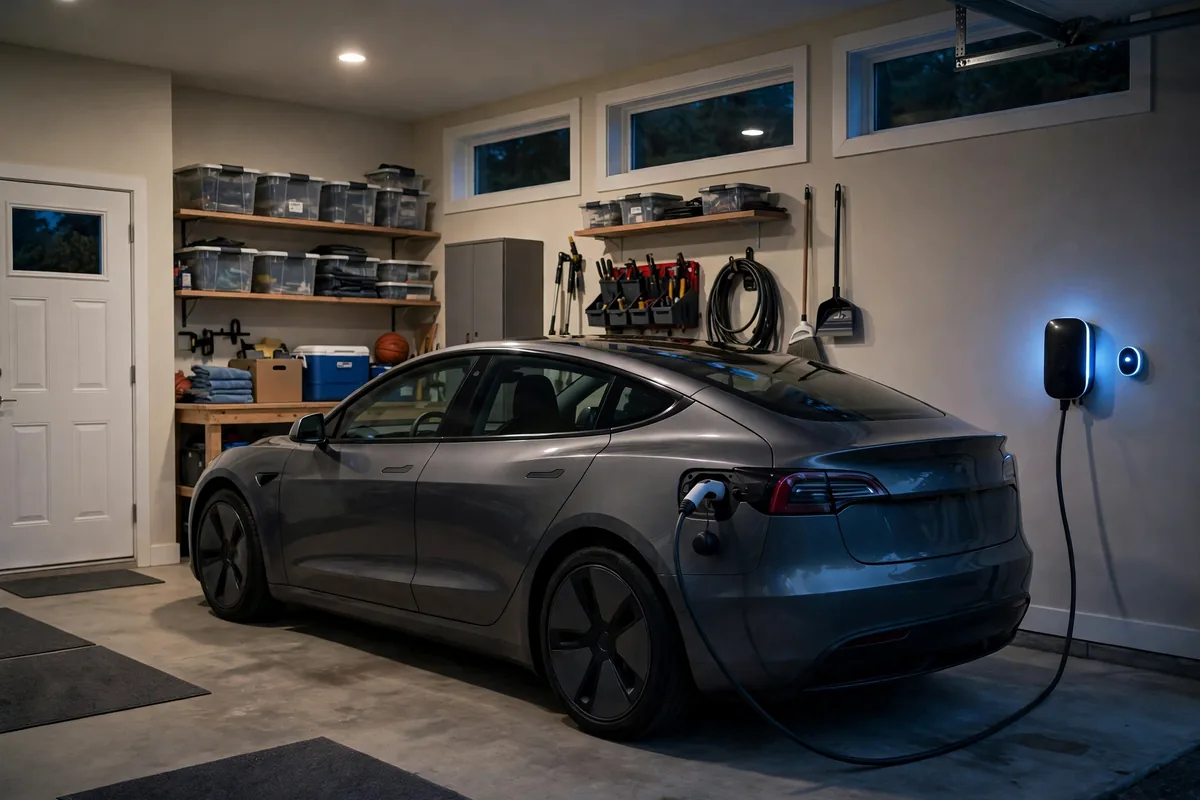
An electric vehicle changes one thing about your house: it becomes your fuel station. Getting that right means a proper circuit, a panel that can carry the load, and a charge rate matched to how you actually drive. This guide walks Springfield EV owners through the decisions in order.
Level 1 vs Level 2, In Real Miles
A standard outlet (Level 1) returns about 3 to 5 miles of range per hour: fine for short commutes, painful after a Nashville round trip. Level 2 on a 240-volt circuit returns roughly 25 to 40 miles per hour depending on the charger's setting, refilling most drivers overnight with hours to spare.
The Panel Decides the Charger Size
Chargers are continuous loads, so a 48-amp charger needs a 60-amp circuit. A load calculation on your service tells us the largest safe setting, and many chargers can be commissioned at a lower rate to fit a 100-amp service, sometimes with a load management device instead of a panel upgrade.
Hardwired or Plug-In
Hardwired chargers reach the highest rates and present the cleanest install. Plug-in units on a 14-50 receptacle cap at 40-amp charging and can move with you. Both require GFCI breaker protection under current code for garage receptacles and dedicated circuits either way. See our EV charger installation service page for the Springfield process.
Placement Is a Daily-Life Decision
Charge port location, cable reach, a second EV later, driveway versus garage parking: five minutes of planning saves years of cable wrestling. Outdoor mounting is standard for most major chargers, including Tesla and ChargePoint units we install.
Permits and Inspection
A new 240-volt circuit is permitted, inspected electrical work in Tennessee. The paperwork is part of a proper installation and part of your documentation if incentives or a home sale come into the picture.
Related Reading
- Why Does My Breaker Keep Tripping?
- Flickering Lights: Causes From Minor to Serious
- Burning Smell From an Outlet: What To Do Right Now
Need hands-on help in Springfield, TN? Call (615) 716-3086.