Breakers That Trip
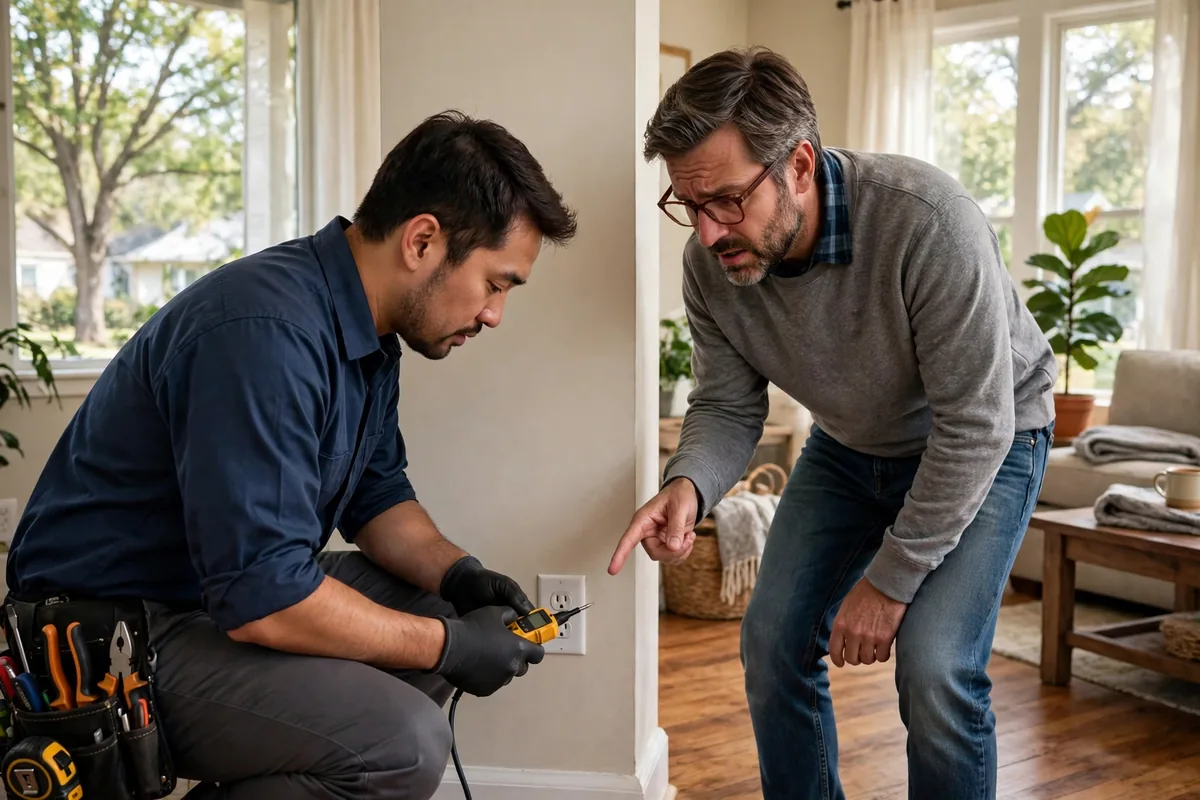
A breaker is a safety switch. Occasional trips under heavy load are information; daily trips are a diagnosis waiting to happen. The usual causes are overloaded circuits (space heaters and window AC units lead in Tennessee), failing appliance motors, short circuits and ground faults. Start with our circuit breaker repair page, and never solve trips by installing a bigger breaker.
Flickering and Dimming Lights
A short dip when the air conditioner starts can be normal. Constant flicker, flicker in one room, or lights that brighten while others dim are not. Brightening paired with dimming is the classic signature of a failing neutral connection, which can damage electronics and deserves prompt troubleshooting.
Dead Outlets
Work the simple causes first: a tripped GFCI upstream (check bathrooms, kitchen, garage and outdoor boxes), then the breaker. If neither explains it, a failed connection at one receptacle often takes the rest of the run down with it. Outlets that are loose, warm or discolored should be replaced, not nursed along.
Warm Switches, Buzzing and Smells
Warm dimmers can be normal at high load; warm standard switches and outlets are not. Buzzing at the panel, sizzling sounds, and any burning smell are stop-and-call symptoms. Switch the circuit off and treat it as an emergency until it is proven otherwise.
Problems After Storms
Robertson County storm lines bring surges, partial outages and water in outdoor equipment. If half your home is out after a storm, the cause is often a lost service leg or utility issue; if one circuit misbehaves, it is house-side. Whole-home surge protection is the standing defense for the next storm.
When to Stop DIY and Call
Resetting a breaker once, testing a GFCI monthly, and changing detector batteries are homeowner tasks. Anything inside the panel, anything that repeats, and anything involving heat, smell or water near electricity belongs to an electrician. Call (615) 716-3086.
Reference: Springfield Electric Department safety guidance.