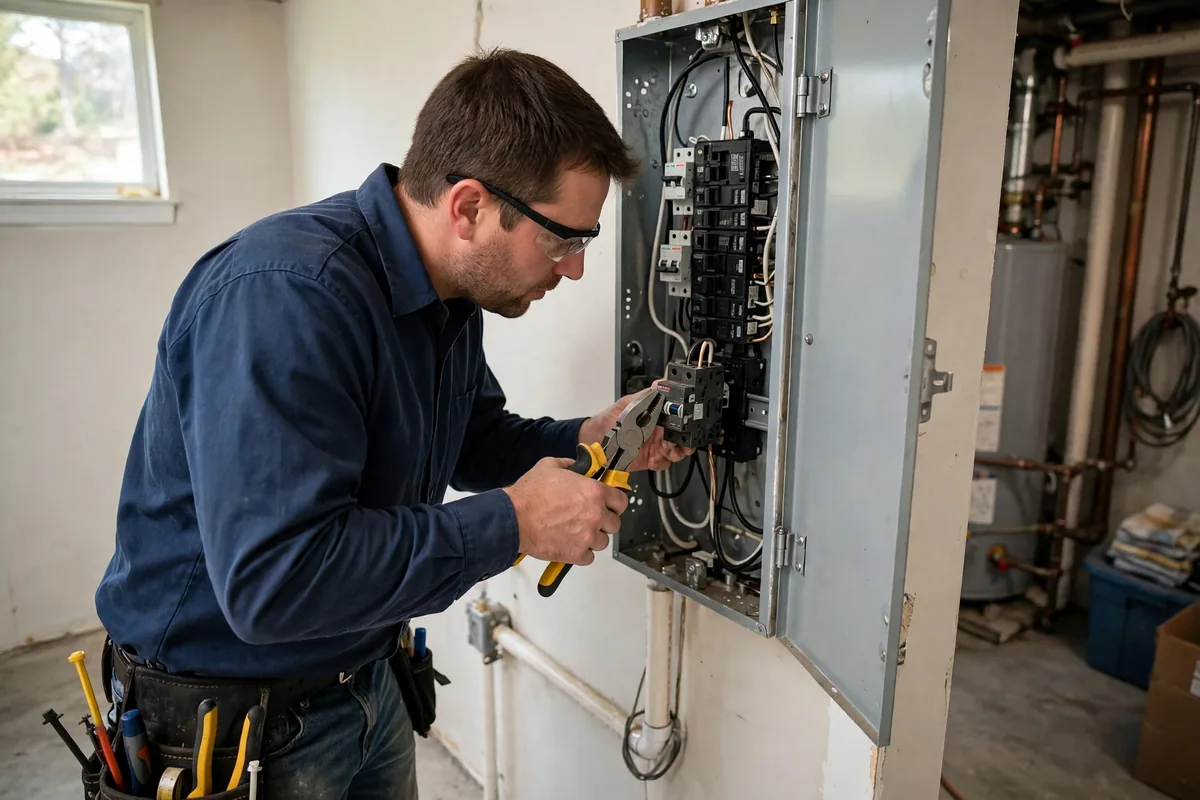
Circuit Breaker Repair: What This Service Covers
For homes around homes out toward The Legacy Golf Course, circuit breaker repair is a regular part of our week. At its core the service is diagnosing breakers that trip, refuse to reset, feel hot or buzz, and separating a simple failed breaker from the overloads, shorts and ground faults the breaker is warning you about. Springfield-wide, larger homes toward The Legacy and Honeysuckle Hill Farm tend to run more lighting, well equipment and outbuilding circuits than older panels were built for, which is why the local details matter as much as the technical ones. That mix shapes the work: Springfield sits in Highland Rim country north of Nashville, summers run hot and humid, and spring storm lines crossing Robertson County test older electrical systems hard.
A tripping breaker is a symptom, not a diagnosis. We measure the actual current draw on the circuit, test the breaker itself, then trace for short circuits, ground faults, failing appliance motors and shared neutrals. That order matters: swapping the breaker without testing the circuit can mask a fault that is still heating up inside a wall.
Signs You Need Circuit Breaker Repair
- The same breaker trips daily or weekly
- Breaker trips the moment a specific appliance starts
- Breaker will not stay reset at all
- Breaker or panel area feels warm to the touch
- Buzzing or crackling sound from a breaker
- Half an outlet run or one room keeps losing power
One sign in isolation can often wait for a weekday slot. Patterns are different: repeats, combinations, and any hint of heat or burning should be treated as same-day problems. Our guide to common electrical problems explains which symptoms can wait and which cannot.
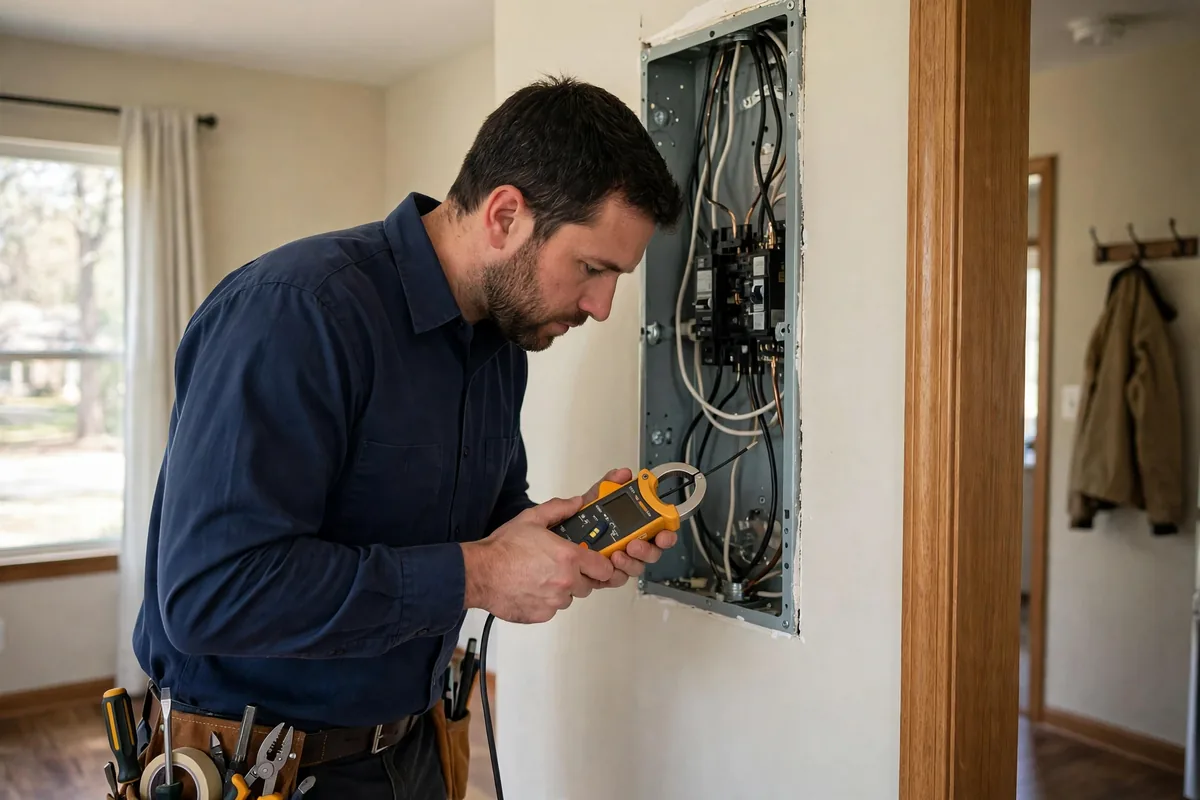
How We Diagnose It
A tripping breaker is a symptom, not a diagnosis. We measure the actual current draw on the circuit, test the breaker itself, then trace for short circuits, ground faults, failing appliance motors and shared neutrals. That order matters: swapping the breaker without testing the circuit can mask a fault that is still heating up inside a wall.
The pattern is consistent: measure, show, explain, quote. If the circuit breaker repair fault turns out smaller than feared, the quote shrinks with it, and you will see why.
The Springfield Call Pattern
Locally, breaker calls spike twice a year: the first deep cold snap, when space heaters join furnaces on tired circuits, and the first hot week, when window units and compressors start together at dinner time. A homeowner near Garner Street Park might describe the same trip a Historic District homeowner reports, yet the causes diverge: shared circuits in one, a dying breaker in the other. The pattern diary you keep for a week is diagnostic gold.